

March 5, 2024
Staff Report
LAHORE:
In a surprising finding, Pakistanis show higher levels of mental wellbeing compared to many countries of the world, including the UK and India. Impressively, Dominican Republic, Sri Lanka and Tanzania occupy the top three slots in terms of mental health.
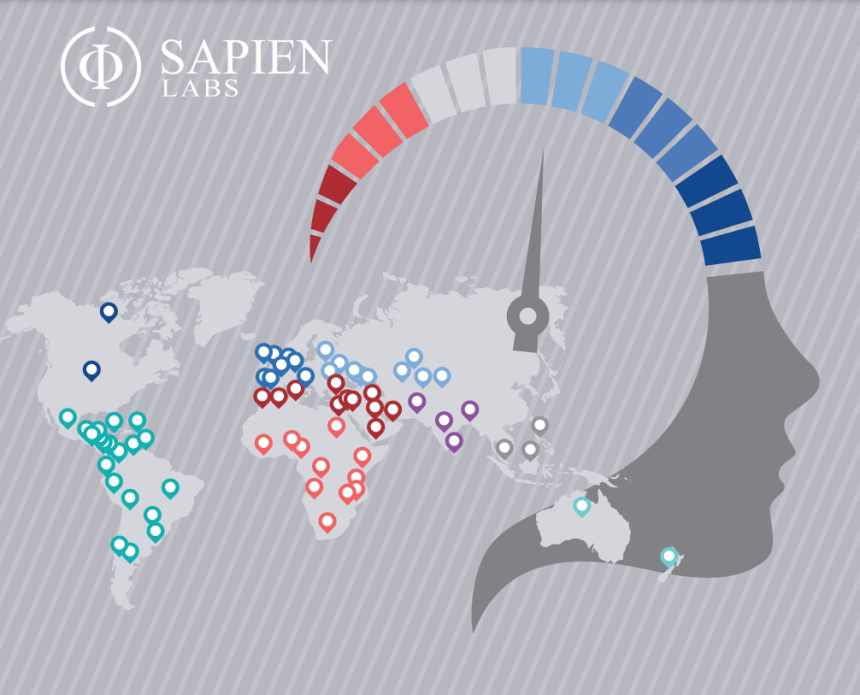
The findings are a part of the Mental State of the World in 2023, an annual report by the Global Mind Project, published on March 4, 2024. The report provides trends and insights into the mental wellbeing of Internet-enabled populations around the globe. The findings are based on data from over 500,000 respondents in 13 languages across 71 countries spanning nine regions.
According to the report, Pakistan ranks 56th out of 71 countries in overall mental wellbeing in 2023, with India falling behind at 61st and the UK at 70th place. It finds that 28 percent of Pakistanis are distressed and struggling, compared to 30 percent in India and 35 percent in the UK.
The mental health of younger generations, particularly those under age 35, steeply dropped during the Covid-19 pandemic while those over 65 stayed steady.
Interestingly, the report highlights that there is no co-relation between mental and economic wellbeing as some of the wealthier states in Europe or Central Asia, did not score as well as the poorer states in Africa and Latin America.
The report raises important questions about the lasting impact of the pandemic, and “how shifts in the way we live and work and the amplification of existing habits (e.g. remote working, online communication, consumption of ultra-processed food, use of single-use plastics) have cumulatively pushed us into a space of poorer mental wellbeing,” it states.
The observation is based on several categories, including Mood and Outlook, Social Self, Adaptability and Resilience, Drive and Motivation, Cognition, and Mind-Body Connection. The findings reveal that the UK, Ireland and Australia have lower Drive and Motivation scores while Bolivia, India, Pakistan and Kazakhstan have higher scores compared to similarly ranked countries. Similarly, in the Adaptability and Resilience category, Canada, Germany, Ireland, Australia, South Africa and the UK score lower compared to similarly ranked countries. The US has a lower Mind-Body Connection compared to countries like India, Pakistan and Bolivia.
No room for complacency in mental health in Pakistan
During the onset of the Covid-19 pandemic, mental health concerns became increasingly apparent, says psychiatrist Dr Nusrat Rana – “People experienced the loss of loved ones and struggled with sleep difficulties amid a pervasive atmosphere of fear. But with the gradual rollout of vaccinations, these issues began to subside.”
While Pakistan may demonstrate better mental health outcomes than many other countries, the overall state of affairs is still far from encouraging. According to the World Health Organisation (WHO), in Pakistan, mental disorders account for more than four percent of the total disease burden. The percentage of women with mental health disorder is higher.
The WHO estimates that 24 million people in Pakistan are in need of psychiatric assistance. But, the allocated resources for the screening and treatment of mental health disorders are not enough to meet the increasing needs. Pakistan has only 0.19 psychiatrists per 100,000 people, “one of the lowest numbers in WHO Eastern Mediterranean Region, and in the whole world” states the WHO report.
It is generally believed by mental health advisers that the stigma attached to mental illness keeps sufferers marginalised and isolated. Sehat Kahani, Digital Healthcare Platform, that connects patients to doctors using an app, suggests that as poverty is a prominent issue within Pakistan, mental health support is a “luxury” for many people in the country.
Peoples’ inaccessibility to mental health practitioners and clinics, especially away from the urban centres, further exacerbates their condition. The hurdles in the way of reliable mental healthcare has encouraged quacks, offering recourse to religion and other unscientific methods, to flourish.
Shrines have always served as centres of healing, particularly in regions lacking accessible and high-quality mental health services. “An increasing number of individuals are turning to shrines in search of remedies for their problems,” adds Dr Nusrat Rana. Surprisingly, “even educated individuals are embracing beliefs in magic and spirits, jado and djinns, as they seek solutions to their challenges,” she adds.
“The clinics in cities are overly extravagant, making individuals from remote areas feel uncomfortable,” she says. “They struggle to connect with mental health professionals who are foreign-qualified, widening the gap between those seeking mental healthcare and accessible professionals.”