

December 31, 2025
By Rehan Piracha
LAHORE
Afghan refugees who have arrived in Afghanistan from Pakistan are now confronting a cascade of hardships that threaten their survival and reintegration, according to a comprehensive survey by UNHCR released on December 30.
The Afghanistan post-return monitoring survey report, which interviewed 1,658 returnee households, paints a stark picture of families struggling with food insecurity, inadequate shelter, and limited livelihood opportunities as they attempt to rebuild their lives in Afghanistan.
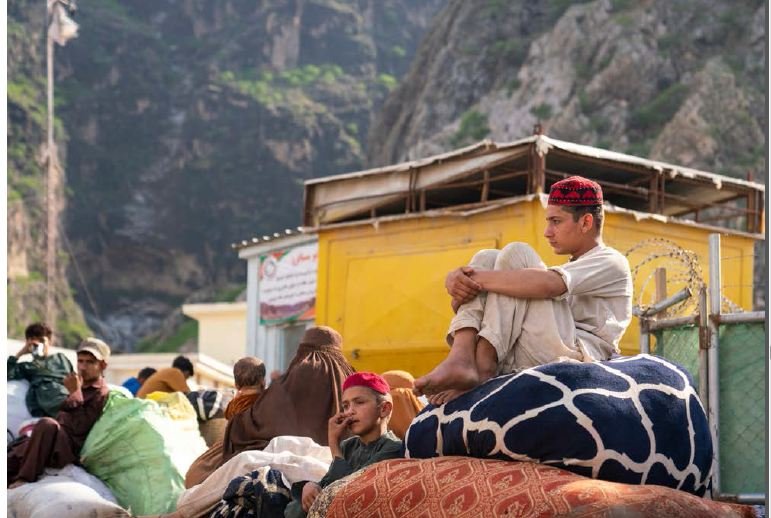
Between January and November 2025, over 2.7 million Afghans returned to Afghanistan, driven by deportation policies and deteriorating conditions in neighboring countries. The Government of Pakistan’s Illegal Foreigners Repatriation Plan (IFRP), which resumed in March 2025, forced many Afghan families to leave abruptly, often under adverse conditions. In July, Pakistan expanded the policy to include registered refugees holding Proof of Registration (PoR) cards, prompting more than 314,500 Afghans to return between April and August alone.
These mass returns have overwhelmed Afghanistan’s already strained infrastructure, leaving returnees to navigate a humanitarian crisis marked by widespread poverty, restricted access to basic services, and limited economic opportunities. The challenges are particularly acute for returnees from Pakistan, who report deeper economic strain than those returning from Iran.
Food insecurity and malnutrition
Food insecurity remains one of the most critical challenges facing returnee families. The survey found that 63 percent of returnees reported inadequate access to food, with returnees from Pakistan particularly affected—only 35 percent indicated they had sufficient food, compared to 44 percent of those from Iran. “I need a lot of support for the treatment of my two-year-old child so his health condition will get better, and I will find hope for living,” one returnee told surveyors, highlighting how malnutrition compounds family struggles.
An alarming 82 percent of returnee households reported that family members had skipped meals due to food shortages, a seven percentage point increase since December 2024. The situation is even more dire for female-headed households, with 88 percent reporting skipped meals compared to 81 percent of male-headed households.
The Reduced Coping Strategy Index reveals that 60 percent of returnee households fall into the “high” usage category, indicating frequent reliance on severe food-coping strategies. Many families have exhausted their resources, with 39 percent reporting no food stocks at all and most others holding less than three weeks’ worth of supplies. The majority are forced to borrow money simply to purchase food, trapping them in cycles of debt.
Housing crisis and overcrowding
Housing conditions for returnees are precarious at best. Three-quarters of surveyed households live in substandard mud houses, with the situation more prevalent among returnees from Pakistan (78 percent) than Iran (68 percent). Only 13 percent reside in concrete housing.
Nearly half of all returnees (49 percent) rent their homes, rising to 62 percent among those who returned from Pakistan after April 2025. Critically, 74 percent of renters reported being unable to afford their rent—a 13 percentage point increase since December 2024.
“I can’t afford rent, but I’m forced to pay, [there is] no other option,” one returnee explained, capturing the impossible choices families face daily.
Female-headed households are significantly disadvantaged in housing security. They are far less likely to own or inherit a home (five percent compared to 27 percent of male-headed households) and more likely to rent, creating heightened tenure insecurity.
Overcrowding has reached crisis levels, with 80 percent of households reporting living conditions with up to four people per room—a stark 27 percentage point increase since late 2024. These cramped conditions create health risks and eliminate any semblance of privacy for families already dealing with trauma and displacement.
Economic hardship and unemployment
Economic opportunities remain scarce for returnees, with devastating consequences for family welfare. While 60 percent of households reported having a source of income, massive gender disparities persist: only 24 percent of women reported earning an income compared to 66 percent of men.
Daily wage labour dominates employment among returnees, particularly those from Pakistan, with 57 percent of men relying on this precarious and unstable work. For women who do earn income, 58 percent engage in home-based tailoring, reflecting severe restrictions on women’s mobility and work outside the home.
Income levels remain desperately low. Only eight percent of returnees reported monthly household incomes above 10,000 AFN (approximately US $147), down from 14 percent in 2024. Alarmingly, 14 percent earned less than 1,500 AFN (US $22) per month, up from just three percent in December 2024.
Female-headed households face the most severe economic hardship, with 53 percent earning 3,000 AFN (US $ 44) or less per month. Debt has become nearly universal, with 88 percent of households reporting outstanding debts that typically exceed their monthly income. The main drivers of borrowing are basic survival needs: food (72 percent), healthcare (64 percent), and rent (31 percent).
Education barriers for children
Access to education remains highly constrained for returnee children, particularly girls. The survey found that 71 percent of returnee households with children reported that no girls in the family were attending school, compared to 51 percent for boys.
“We are afraid… since they have banned women, and they don’t allow women to go to the markets,” one returnee explained, highlighting how restrictions on women and girls permeate every aspect of life.
For returnee families from Pakistan arriving after April 2025, the situation is particularly dire: 81 percent reported no girls attending school, and 68 percent reported no boys enrolled. The primary barriers differ by country of origin. Returnees from Iran most often cited policies and laws restricting female education (44 percent), while returnees from Pakistan pointed to economic obstacles, with 34 percent unable to cover the cost of transportation, uniforms, books, and fees.
For boys kept out of school, economic necessity plays a significant role. Sixteen percent of households reported their sons had to work to support the family financially, reflecting how poverty forces families to sacrifice their children’s education for immediate survival.
Healthcare access and medical needs
Despite 89 percent of returnees reporting a medical facility in their community, access to healthcare remains severely limited. One-third of households (34 percent) said a family member needed medical attention in the past six months but could not obtain it.
Financial barriers remain the most common obstacle, cited by more than three-quarters of households. Women face disproportionate challenges in accessing care: in 58 percent of cases where a household member couldn’t access medical facilities, the person in need was female. This reflects the impact of mahram requirements and movement restrictions that prevent women from traveling to health facilities without a male guardian.
Respondents with disabilities faced particularly acute barriers, with 51 percent reporting unmet medical needs compared to 28 percent of those without disabilities. Distance to facilities, shortage of qualified medical personnel, and insufficient medicines in health centers compound these challenges.
Water, sanitation, and safety concerns
Access to basic water and sanitation has deteriorated significantly. Twenty-seven percent of returnee households reported insufficient water for daily needs—an eight percentage point increase since December 2024. Returnees from Pakistan were notably worse off, with only 69 percent reporting adequate access compared to 82 percent of those from Iran.
Sanitation access is similarly strained. Just 67 percent of returnees reported adequate access to latrines, handwashing, and basic facilities—a 16 percentage point drop from late 2024. Households with a member with a disability faced a 12 percentage point gap in access compared to those without.
Safety concerns around latrine use are widespread, with 35 percent of returnees reporting they do not feel safe. Women were slightly more likely than men to express concerns (36 percent versus 33 percent). The main risks cited were overcrowding and a lack of doors or locks, with one respondent noting concerns about “no door, no lock” and “too many people using latrines.”
Fewer than half of surveyed households reported that every household member held a Tazkira—Afghanistan’s essential national identification document. The absence of documentation restricts access to essential services for 71 percent of returnees, particularly education (44 percent), housing (23 percent), and healthcare (23 percent).
“My wife does not have a Tazkira, and her Tazkira can only be prepared based on her father’s family, whose families are still immigrants in Pakistan,” one returnee explained, illustrating how displacement disrupts the documentation chain.
Returnees from Pakistan who arrived after April 2025 face the greatest challenges, with only 31 percent of households reporting that most or all members possessed a Tazkira. The primary barrier remains the lengthy and costly application process, reported by 67 percent of respondents.
Mental health and psychosocial distress
The cumulative weight of these challenges has taken a severe toll on mental health. Sixty-seven percent of returnees reported experiencing stress severe enough to disrupt daily life, with symptoms including disrupted sleep, loss of appetite, and social withdrawal.
Economic hardship drives this distress, cited by 92 percent of respondents as their primary source of stress, followed by uncertainty about the future (38 percent) and food insecurity (36 percent). The data reveals a clear correlation: only 36 percent of returnees earning more than 20,000 AFN per month reported debilitating stress, compared to 75 percent of those earning less than 1,500 AFN.
Insufficient humanitarian assistance
Cash assistance from UNHCR, while vital, remains insufficient to meet growing needs. Only 41 percent of returnees reported that the grant was adequate—a 21 percentage point drop from December 2024. Female-headed households were least likely to find the grant sufficient.
Most households exhausted their funds within weeks, primarily spending on food (82 percent), transportation (65 percent), and healthcare (36 percent). Spending on shelter has dropped sharply, reflecting difficult trade-offs families must make when resources are scarce.
“I don’t know which office to complain to. If I knew, I would be sitting in front of that office every day,” one frustrated returnee said, highlighting how only 16 percent of returnees knew where to submit complaints or inquiries about humanitarian assistance.
Major recommendations
The UNHCR report concludes with urgent recommendations for the humanitarian community, donors, and policymakers:
On Cash Assistance: Prioritize support for the most vulnerable groups, including female-headed households and families with people with disabilities. Link cash assistance to sustainable livelihood opportunities and expand hybrid support combining cash and in-kind aid where distribution is challenging.
On Education: Advocate for simplified documentation procedures and expand mobile Tazkira issuance for school-aged children. Provide targeted financial support such as school supply stipends and conditional cash transfers to reduce economic pressures keeping children out of school.
On Healthcare: Expand mobile and outreach health services to reach remote areas and ensure women can safely access care. Strengthen reproductive, maternal, and child health services and introduce transportation subsidies to reduce barriers.
On Food Security: Scale up emergency food assistance in the most food-insecure provinces while expanding livelihood and agricultural initiatives. Establish mobile or community-based food distribution points to reach households facing movement restrictions.
On Housing: Expand shelter programs prioritizing durable housing solutions for vulnerable groups and support community-led construction initiatives to create sustainable, locally-sourced shelter options.
On Livelihoods: Scale up vocational training aligned with local labor markets, with specific focus on women and youth. Facilitate access to microfinance and promote home-based work opportunities for women facing mobility restrictions.
On Civil Documentation: Advocate for simplified, gender-sensitive documentation processes including mobile or community-based registration options. Deploy community-based documentation facilitators to guide households through paperwork.
The report emphasizes that without sustained, multi-sectoral support addressing both immediate and longer-term needs, returnees will continue to face impossible choices between survival and rebuilding their lives. As one returnee poignantly noted, the challenges of return extend far beyond arrival—they represent an ongoing crisis requiring urgent international attention and resources.